Building SkillUp 0->1 to build trust and transparency
2023
Founding Designer
Product Design
In the 2 years @HackerRank, I contributed to many initiatives for the suite of products. HackerRank is a predominantly B2B company that helps tech leaders hire the best developers. This space has over 21M registered users as of today. In 2023, I led the design for SkillUp, a new AI-talent management tool initiated by Vivek Ravisankar (CEO, Co-Founder of HackerRank) to bridge the gap between Engineering managers and Engineers.
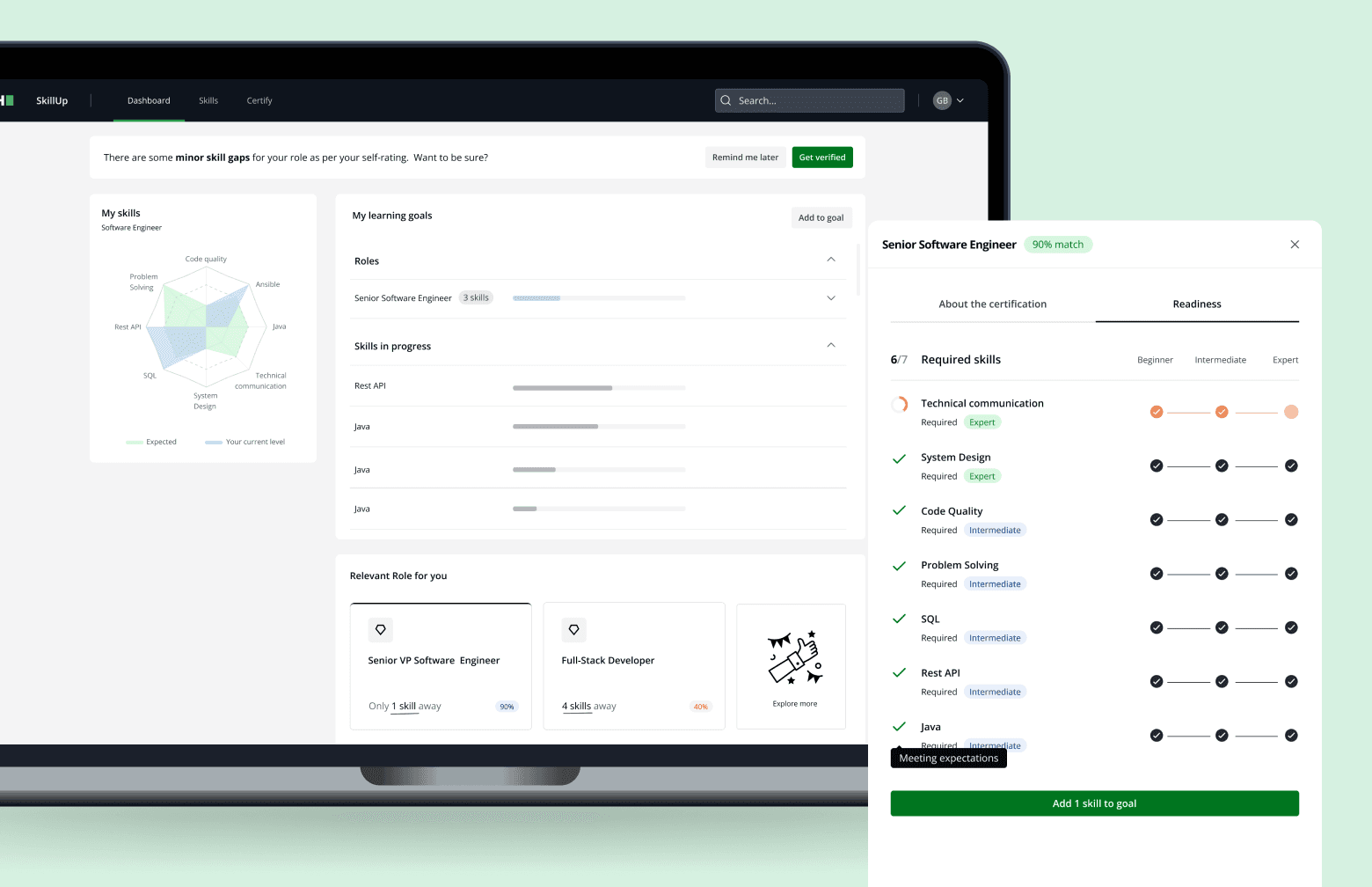
TLDR-
In the midst of economic downturns in late 2022, we observed HackerRank customers suspending their hiring activities, resulting in the cancellations of their subscriptions. Developers were also experiencing job terminations not only due to internal financial constraints but also due to performance-related issues during these challenging periods. Recognising the chance to enhance both the lives of enterprise customers and employee lives, HackerRank identified post-hiring realm of talent management.
SkillUp emerged as a win-win solution to address these needs.
By the end of 6 months, with constant effort, our team managed to secure three beta customers:

Fun Fact-
Before we proposed SkillUp, TCS was already using HackerRank for the talent management use-case. They created a plugin to setup automatic tests for employees and shared reports for their self-improvement.
Hypothesis
"How might we develop a B2B2C product for companies, ensuring engineers have transparency on growth opportunities and recruiters can identify internal talent for new roles?"
JTBD - Jobs-to-be-done
My goal was to design a user interface for a talent management tool for Enterprise customers to identify talent internally and improve performance transparency and trust between engineers and Managers. In order to identify the pushes and pulls in decision making in this space, I conducted a JTBD workshop with my team of 5 Engineers, Engineering manager, Product manager and the CEO.
Takeaways:
Pushes and pulls were validating our hypothesis
Anxieties needed to be tested for after V1
The product had to be data-driven and precise for it's intended user group (CTO's, EM's and VP of Engineering etc.)

Competitors use niche terms and have simple navigation, this led to a lack of functionality
I looked into products that solve for a similar problem statement. Inspirations include:
Gloat
PluralSight

Takeaways:
These products have a 2-3 level depth in the information architecture, not more that 3
They use understandable visualisations for representing important information and data
Skill proficiency was a term used to denote an engineer's skill level in various tech stacks
An exclusive Behind-the-scenes peek 🍿
Below is a Figjam embed from the early stages of the design phase. It includes precious snippets of customer feedback and how that shaped the content. It's chaotic and messy, but it made sense at the time.
What we include for V1
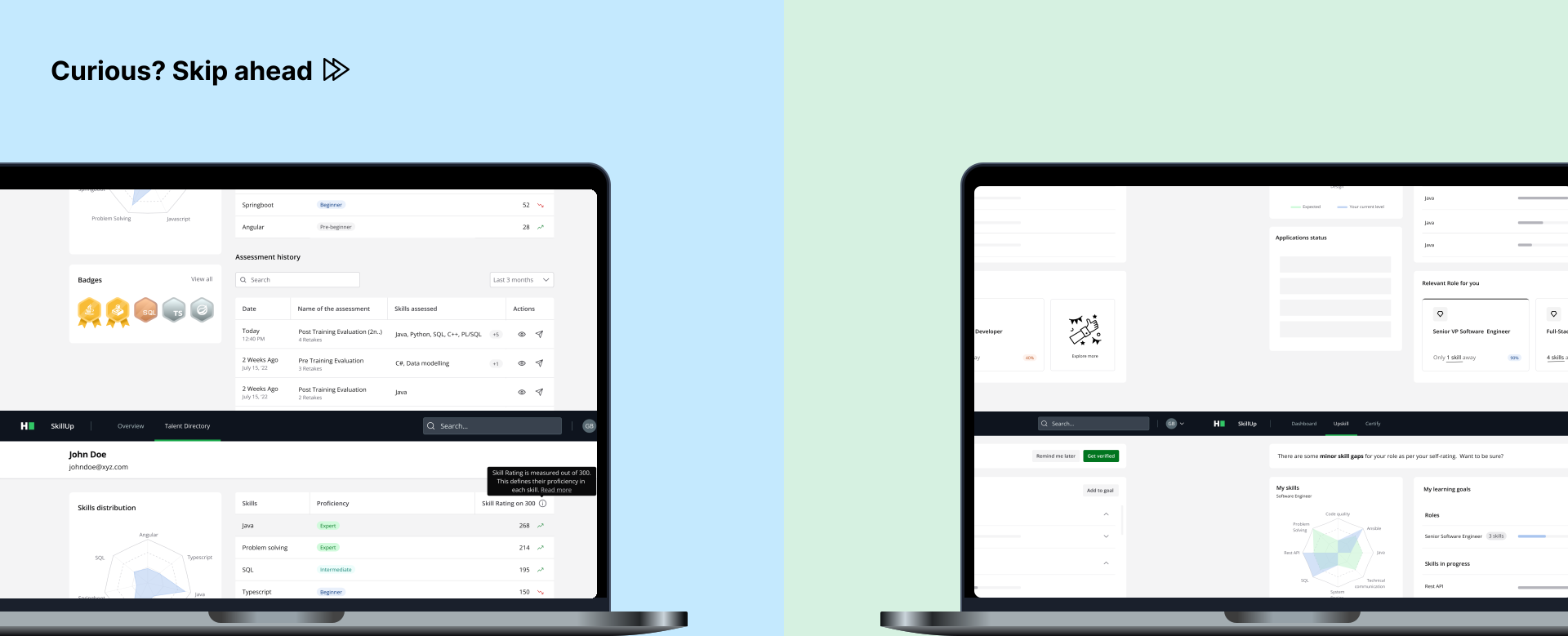
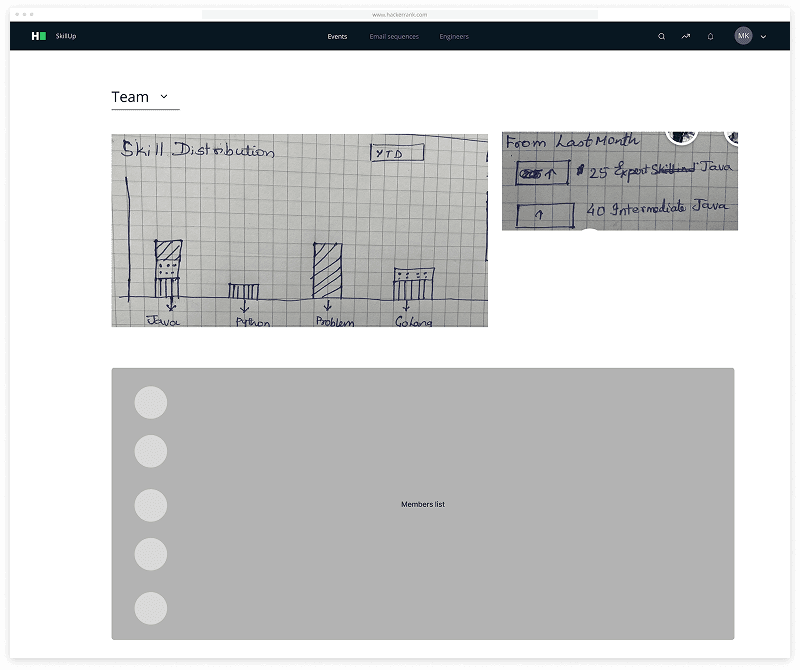
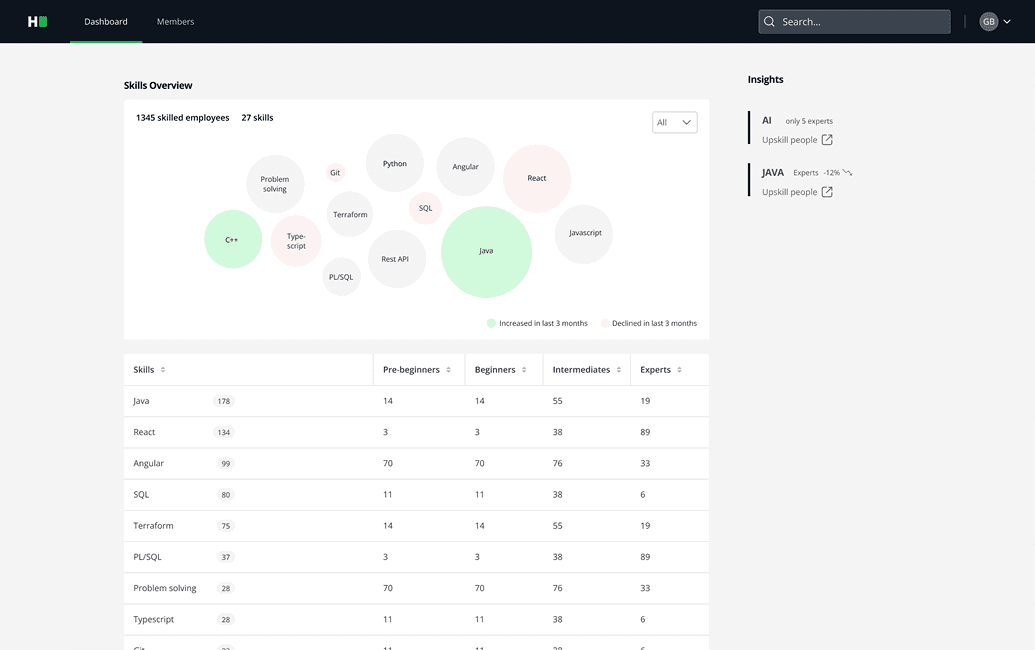
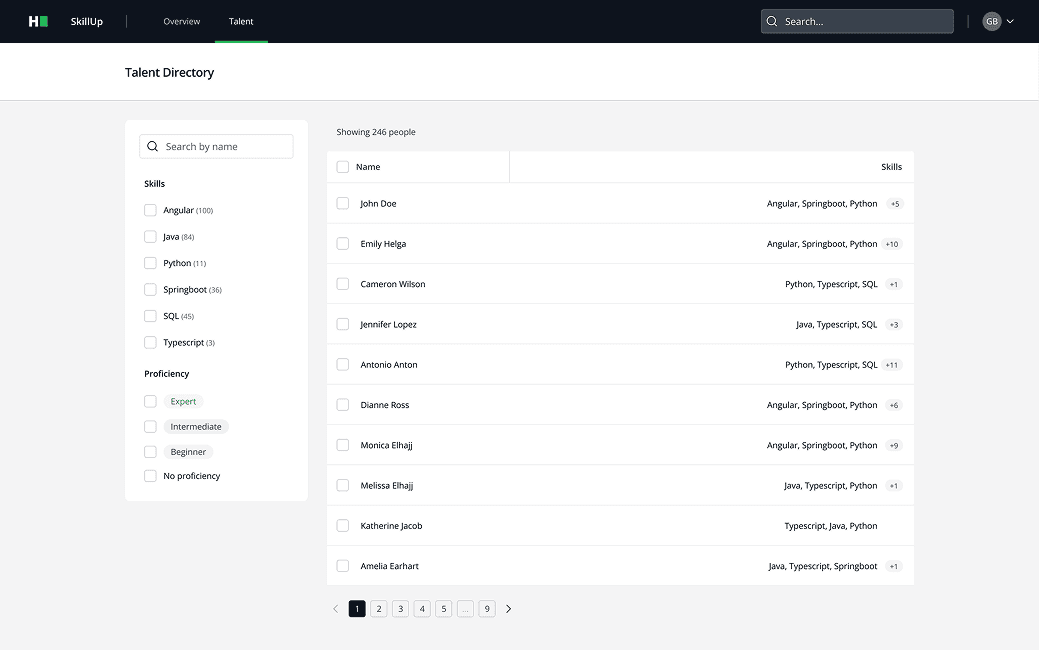
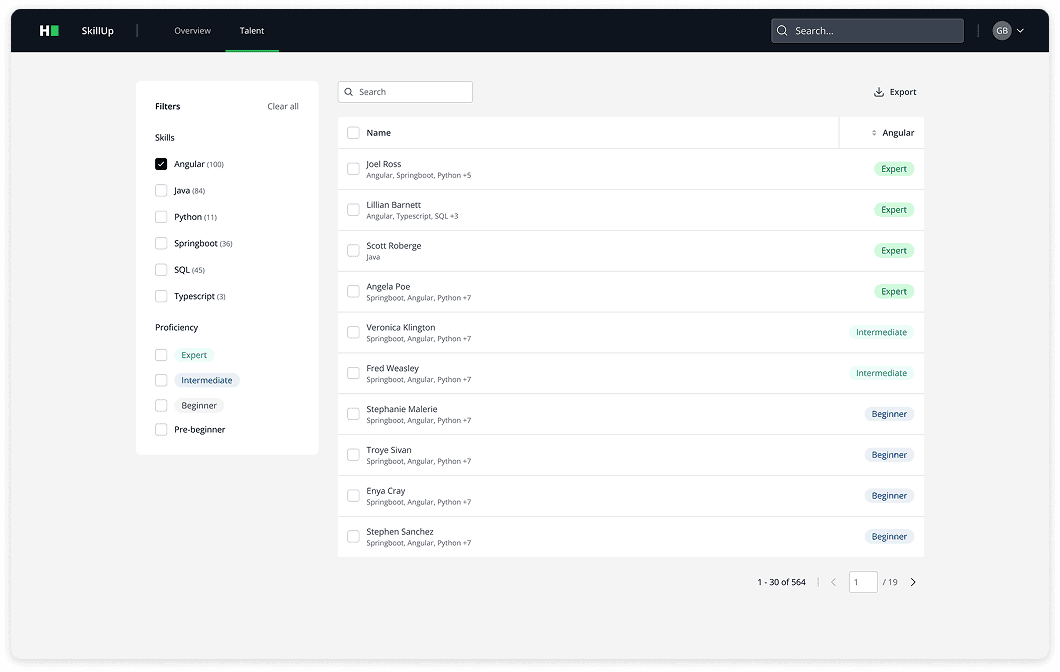
How the UI evolved over months?!
The most-challenging part of the project was UI. The team was figuring out the content as we went. Without clear definitions, I had to adapt to the ambiguity in the start-up environment, ensuring the team feels the design is flexible and improvements are always welcome :)


~~~~~~~~
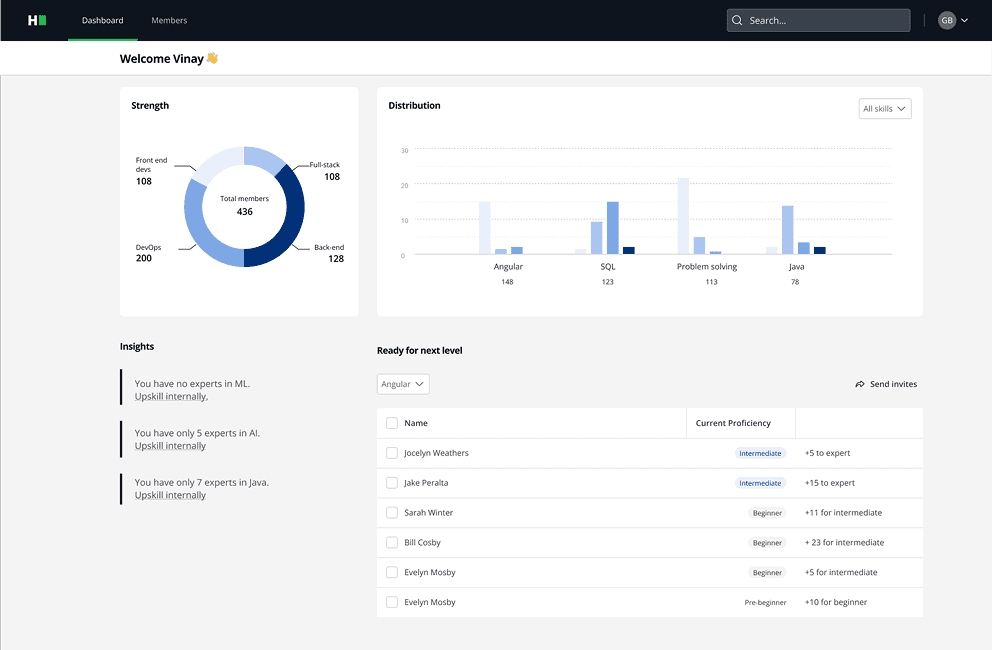
Customer Demo
As the sole designer on the team, I worked on many iterations for the pages (15 to be precise). It helped me solidify the idea and have faith in it as we developed in phases. Below, you will find the finalised product flow that helped pitch the idea and bring on 3 customers in just 6 months.
🔒 Entire Design Process
I discuss the juicy details of the design processes and many iterations in interviews and 1:1 chats. Feel free to reach out if you would like to know more. Excited to talk soon 👋